
Aircraft Predictive Maintenance

The Data Is There. Reviewing It Every Flight Is the Challenge
Maintenance teams already generate valuable aircraft data, but it is difficult to review it consistently across every flight. FDT aircraft predictive maintenance uses recorded parameters to support daily dynamic maintenance, engine monitoring, auxiliary power unit (APU) monitoring, fuel analysis, flight-control monitoring and landing-gear trend analysis, wherever the required parameters are available.

Earlier Maintenance Insight From the Flight Data You Already Collect
Earlier visibility
Identify adverse trends and recurring conditions before they become larger operational disruptions.
Better troubleshooting context
Give maintenance teams parameter history, events and trends rather than isolated symptoms.
Modular deployment
Start with Dynamic Maintenance and add engine, APU, fuel, flight-control or landing-gear modules as needed.
One data pipeline
Use the same collected flight data for both safety and maintenance workflows.
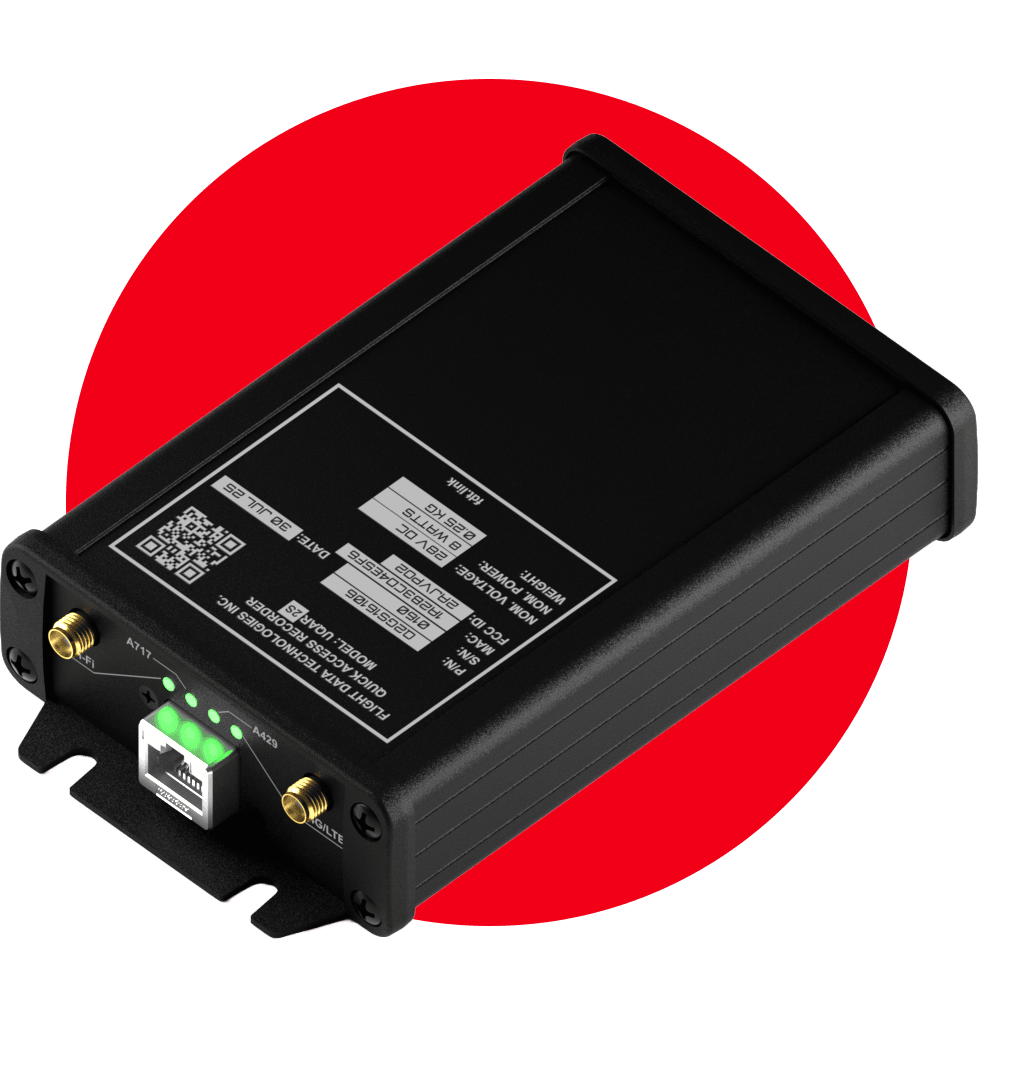
From Recorded Parameters to Aircraft Health Monitoring
- The WQAR (Wireless Quick Access Recorder, or uQAR) collects and securely transfers the available flight data.
- XpressA decodes, validates and organizes the required parameters.
- Maintenance logic identifies configured events, sudden changes and trends.
- Maintenance and reliability teams review dashboards, reports and supporting traces.
- Findings and maintenance outcomes can be used to refine monitoring over time.
What Predictive Maintenance Results Depend On
- Availability depends on aircraft parameters, parameter mapping, data quality and the agreed module configuration.
- Predictive maintenance supports licensed engineering judgment and approved maintenance processes. It does not replace them.

Add the modules that match your fleet's data and maintenance priorities
- XpressA Dynamic Maintenance. Daily visibility into aircraft technical status. Automatic flight processing, fleet dashboard, daily maintenance reports, aircraft status overview, alerts and notifications.
- Engine Health Monitoring. Detect deterioration and sudden changes in engine performance. Includes engine health monitoring (EHM) data, performance alerts and engine condition trend monitoring (ECTM). Prerequisites: Dynamic Maintenance; at least 100 flights of data, preferably up to one year; engine maintenance logs for setup and validation.
- APU Health. Support APU life and maintenance planning. Tracks operating hours, cycles and ground use, with predictive alerts. Prerequisites: Dynamic Maintenance for APU; initial approximate APU cycles and hours provided by the operator.
- Fuel Efficiency. Support fuel-cost analysis. Fuel burn by route and aircraft, APU fuel where available, taxi fuel and operational benchmarking. Prerequisite: Dynamic Maintenance.
- Flight Controls. Help detect degradation before failure. Hydraulic trends, movement monitoring, actuator health indicators and alerts. Prerequisites: Dynamic Maintenance; updated flight-control maintenance log.
- Landing Gear. Support overhaul and repair scheduling. Landing events, brake energy, hard-landing indicators, wear and trend analysis, and alerts. Prerequisites: Dynamic Maintenance; updated landing-gear maintenance log.
Validated Aircraft by Aircraft Before Setup
Aircraft-specific validation is required. Module setup depends on the availability of recorded parameters and, for some modules, on maintenance history provided by the operator.